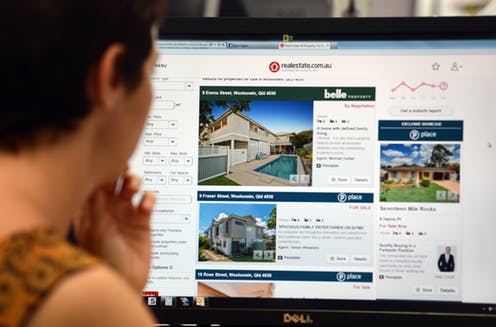
How dependent, as humans, have we become on the Internet? Have 21st century consumers grown so accustomed to digital automation and efficiency that we are willing to make one of life’s most important purchases, a home, without the intervention of a professional real estate agent?

A recently completed Futurelearn MOOC course ‘Building your Career in Tomorrow’s Workplace’ essentially sparked these questions. Its thought-provoking content highlighted that industry boundaries are blurring, as the specificity and nature of job skills required are continuously changing due to technology advancements. I think its safe to say, whether you are looking to secure a new job or already employed, technology has become particular disruptive to both these scenarios in requiring an evolving skill set (Accenture, 2017).
But what happens when technology allows for one set of job skill to becomes a substitute for another? This is the question 21st century real estate agents are facing with their future relevancy being questioned.

New homeowners relying solely on real estate agents to employ their expert market knowledge to either find or sell their home has arguably become a textbook or ´traditional´ homebuying scenario (Casselman et al., 2019).
In this day and age, homeowners looking to either sell or buy a new home are venturing down a rather different path during their homebuying/selling process, one which is not solely dictated by a real estate agent. Access to the internet has provided the average consumer with a significant increase in knowledge and influence, especially with regards to the homebuying process (Cherif et al., 2014).

Access to the Internet has undoubtedly provided the average consumer with a significant increase in knowledge and influence, especially with regards to the homebuying process.
Picture this; you have found a home with potential online, what is your next course of action? Most likely a google search to determine whether you like the neighborhood, previous past property evolution, crime statistics etc. all without actually viewing it in person (Black, 2019). This scenario having become such a natural phenomenon has brought into questioning several of a real estate agents core functions, threatening not only their commission but also their continued necessity during the homebuying process.
The untapped potential associated with the digital real estate market became increasingly apparent in 2018 when a recorded $2.7 billion was invested in real estate technology (Lyons, 2018). One company in particular who has taken great advantage of the opportunities made possible with digital technology has been US tech company Zillow. As a tech company Zillow is reshaping the role of real estate agents, by offering online functions such as virtual open houses or ‘Zestimate’ an online algorithm providing sellers with an instant property valuation (Casselman et al., 2019).
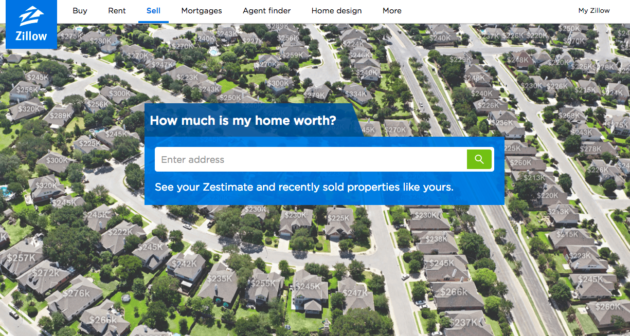

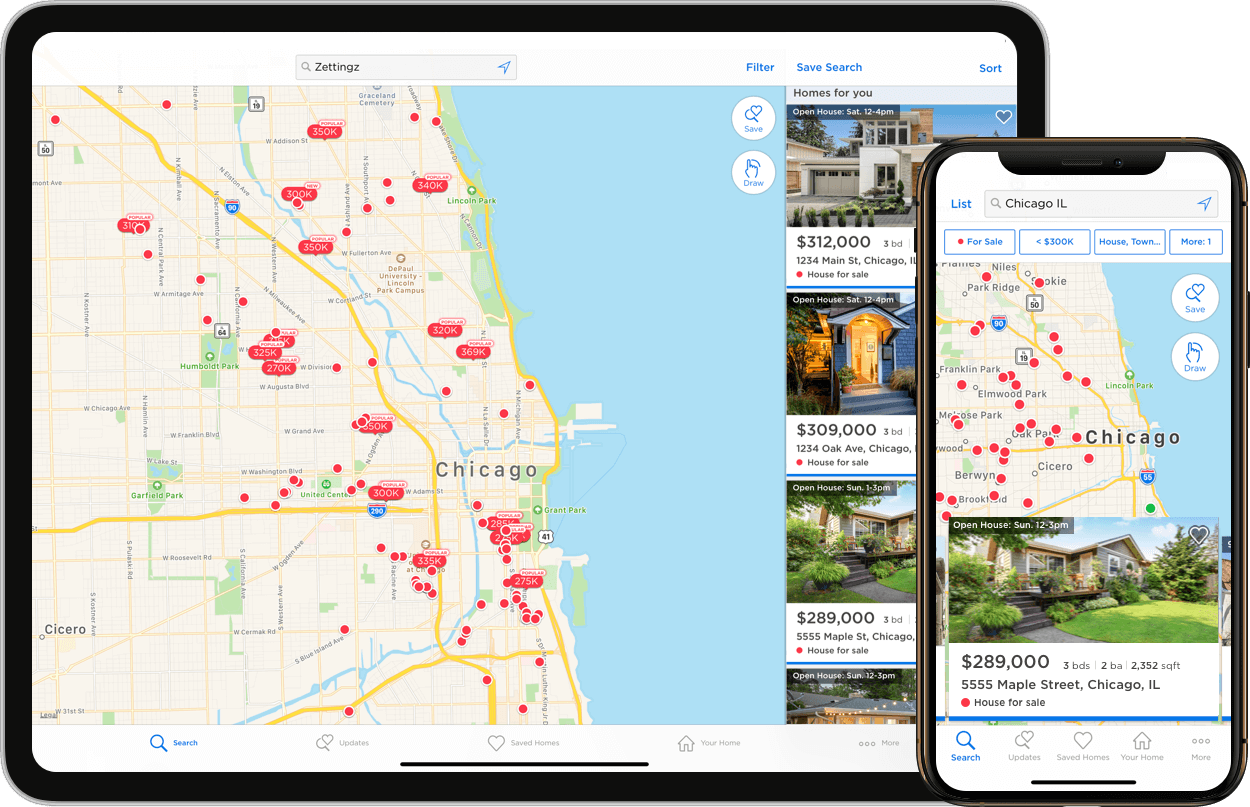
When all is said and done, these functions are arguably just minimizing the absolute necessity for a real estate agent, when the real threat has is tech companies such as Zillow having become licensed realtors with the ability to complete digital closing procedures. Abilities such as these have undoubtedly changed the necessity for a real estate agent, but whether they have entirely lost their future value is debatable.
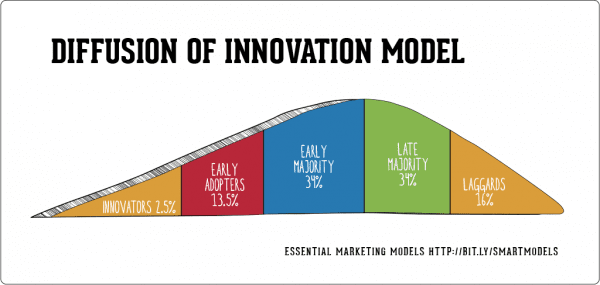
Although, computerization and automation is providing consumers with the option of undertaking their homebuying process with virtually no human contact, one might stop and question to what degree is this process to be trusted? Consumers are essentially trusting that an algorithm to correctly value a property and trust that all necessary details were disclosed in a legally binding contract. This act arguably requires not only a great deal of confidence but also the willingness to make what Botsman (2017) calls a ‘trust leap’. One might argue that the degree to which different customer groups are willing to embrace uncertainty and make a ‘trust leap’ into the unknown depends on their positioning in what Rogers (1962) defines as the ’Diffusion of innovation’.
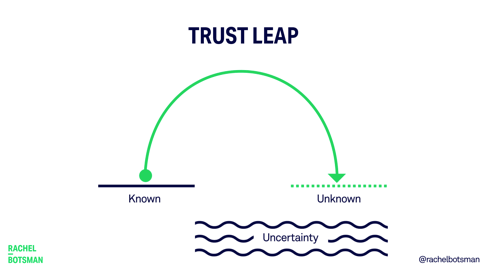
Rogers (1962) argues that ‘innovators’ and ‘early adopters’, of which make up 16% of the diffusion curve, are given their adventuresome and willingness nature more likely to make a ‘trust leap’ with new technologies. While the 84%, are described as customers with a more reserved nature towards new technologies and may perceive the idea of involving a licensed professional with several years of experience as reassuring.
Although, a reality in which real estate agents would be able to make the homebuying process as efficient and convenient as a tech company is hard to imagine, however, that is not to say realtors do not possess the ability to reinvent themselves to become the link between technology and trust. If the next generation of relators are able to harness and utilize the possibilities of technology and combine them with the value of providing trust and navigation, it’s hard to imagine they will completely cease to exist in the future.
References:
- Accenture (2017). New Skills now: Inclusion in the digital economy. Accenture Report. Retrieved 12 February from https://www.accenture.com/_acnmedia/pdf-63/accenture-new-skills-now-inclusion-in-the-digital.pdf
- Black, S. (2019). Are real estate agents a dying breed? (The short answer is “Yes!”). Retrieved 12 February from https://medium.com/@seanblack/are-real-estate-agents-a-dying-breed-ccb3ccbff6fd
- Botsman, R. (2017). Who can you trust?: how technology brought us together–and why it could drive us apart. Penguin UK.
- Casselman, B., & Dougherty, C. (2019). Real Estate’s Latest Bid: Zillow Wants to Buy Your House. Retrieved 12 February 2020, from https://www.nytimes.com/2019/05/07/business/economy/ibuying-real-estate.html
- Cherif, E., & Grant, D. (2014). Analysis of e-business models in real estate. Electronic Commerce Research, 14(1), 25-50.
- Lyons, B. (2018). Three predictions for the future of real estate tech. Retrieved fromhttps://www.forbes.com/sites/forbesrealestatecouncil/2018/12/10/three-predictions-for-the-future-of-real-estate-tech/
- Rogers, E. M. (1962). Diffusion of innovations (1st ed.). New York: Free Press.
 O! So digital


This was a really interesting read! Would you personally ever consider buying or selling a property on a platform like Zillow? I agree that the digital age is changing the way we sell and buy and that real estate agents will have to adapt. Even though my only experience with property so far has been renting student accommodation, I definitely headed straight to the internet every time when searching for a new flat. With this said, I don’t think I could have taken this complete ‘trust leap’ you mentioned, as I still had the face-to-face support from real estate agents and viewings after I found the properties online. I would consider myself to be an early or late majority in the diffusion of innovation model, as although I’m open to change, I would still choose a combination of both digital and traditional methods when making such a big life decision.
LikeLike
That is a informative post! I can recognize many new ideas and viewpoints from this article, like how the digital world and new technology in internet shocked the traditional way of home buying process. It sounds like a great and more efficient way if we can achieve such channel to evaluate the property. Nevertheless, from my own opinions, there are still couples of issues within this revolution industry. The safety factor is definitely the most significant issues that the agency need to take care.
LikeLike